
ALGORITHMIC
TRADING
Algorithmic trading utilizes computer programming to perform all functions in the buying and selling of tradable assets. The developers of trading algorithms use sophisticated systems to calculate variables that affect the movement of the markets (timeframes, prices, and volumes) and then execute buy/sell orders using high speed instructions to brokerage firms for processing.
HOW DOES IT
WORK?
Algorithms are built around specific trading strategies, to behave in a pre-defined way and react when the algorithm's criteria or conditions are met. Algorithmic trading is also referred to as algo trading, automated trading, quantitative trading (quant) and robotic trading.
Algorithm trading is usually used synonymously with automated trading because they are frequently done together; the algorithm does the decision making and the automation does the orders execution. Technology has made it possible for both of these components to be performed by individuals as well as larger organisations with bigger resources. The major benefit of algorithmic trading is in the precision of trade order execution and speed of execution using online brokerages.
WHO IS USING
ALGORITHMIC TRADING?
Initially algo trading was developed by large organisations with the required resources, such as Investment banks, pension fund management companies, mutual funds, large and small hedge funds.
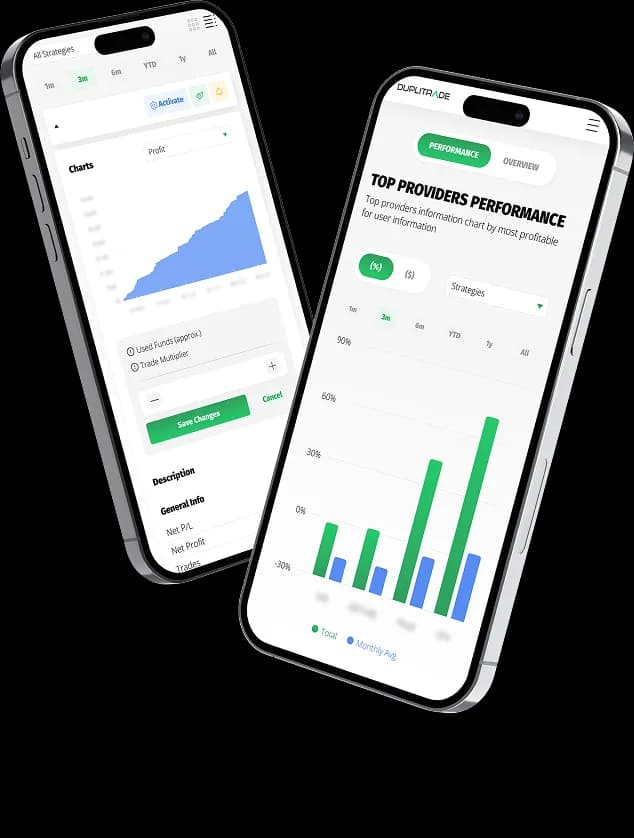
But more recently as technology becomes more available to the masses, individuals or teams of developers can create algorithms to offer retail investors to use as part of their portfolio investment. These days It is reported that around 80% of all trading activity in the FX (Foreign Exchange) market is executed by algorithms.
HOW DOES ALGORITHMIC TRADING
WORK?
Basically it involves the use of computers at every stage of the trade order flow. The market exchanges supply a constant stream of data to the general public for consumption. This data is often used to build charts to display trading metrics for every symbol such as volumes, prices over various time periods (1 min, 5 min, 1 hour, 1 day etc). This market data can be saved on a computer server to be used as a database.
A trading algorithm can be run on this database using many types of applications. The application checks if the market conditions are met against the algorithm's criteria and proceeds to execute the buy or sell trade orders. The orders are performed using the server to communicate with the market exchanges via brokers.
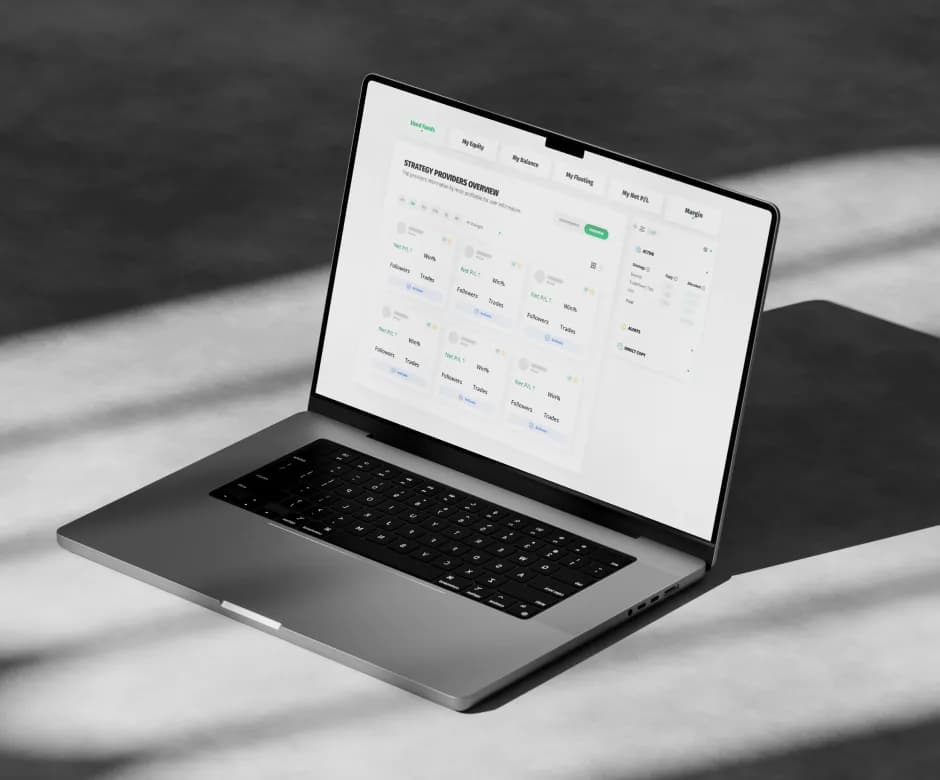
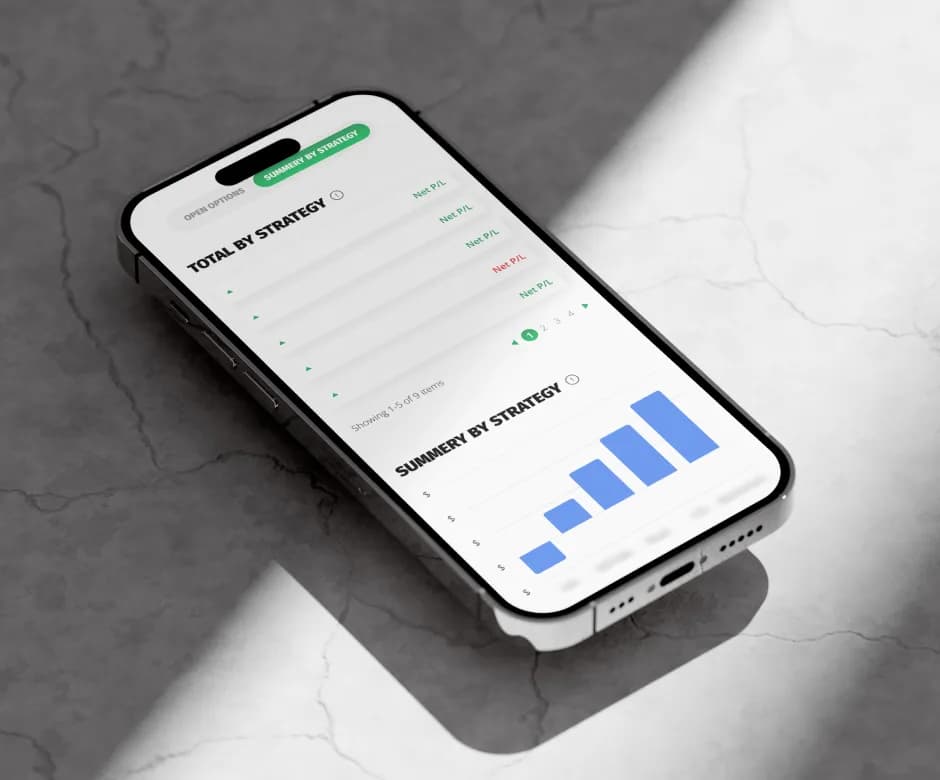
The investor can then decide to copy one or more Strategy Providers and have all the trading activity displayed and summarized in charts and tables so the copying investor can easily follow the performance of the copy trading portfolio.
Market Exchanges
A Computer Server
Algorithmic Application
HOW CAN I BENEFIT FROM
ALGORITHMIC TRADING?
Algo trading is not just about deploying technology to perform what was generally a manual task before. There are clear benefits particularly in time savings and cost savings as well as the ultimate task of beating our own defaulted human behaviour.
the main reasons to adopt algorithmic trading:
•The learning to trade curve is much shorter
•Expensive beginner trader errors can be avoided
•Trades are executed simultaneously and at optimized price ranges
•Trade orders are executed much faster
•Flattens the emotional roller coaster by reducing psychological effects

DOES DUPLITRADE OFFER
ALGORITHMIC TRADING?
The algorithmic trading on DupliTrade is mostly applied to the Foreign Exchange (FX) market but also includes other asset classes such as commodities (Gold, Crude Oil etc), Equities (Publicly Traded Stocks), Indices (S&P500, NASDAQ, DAX etc).
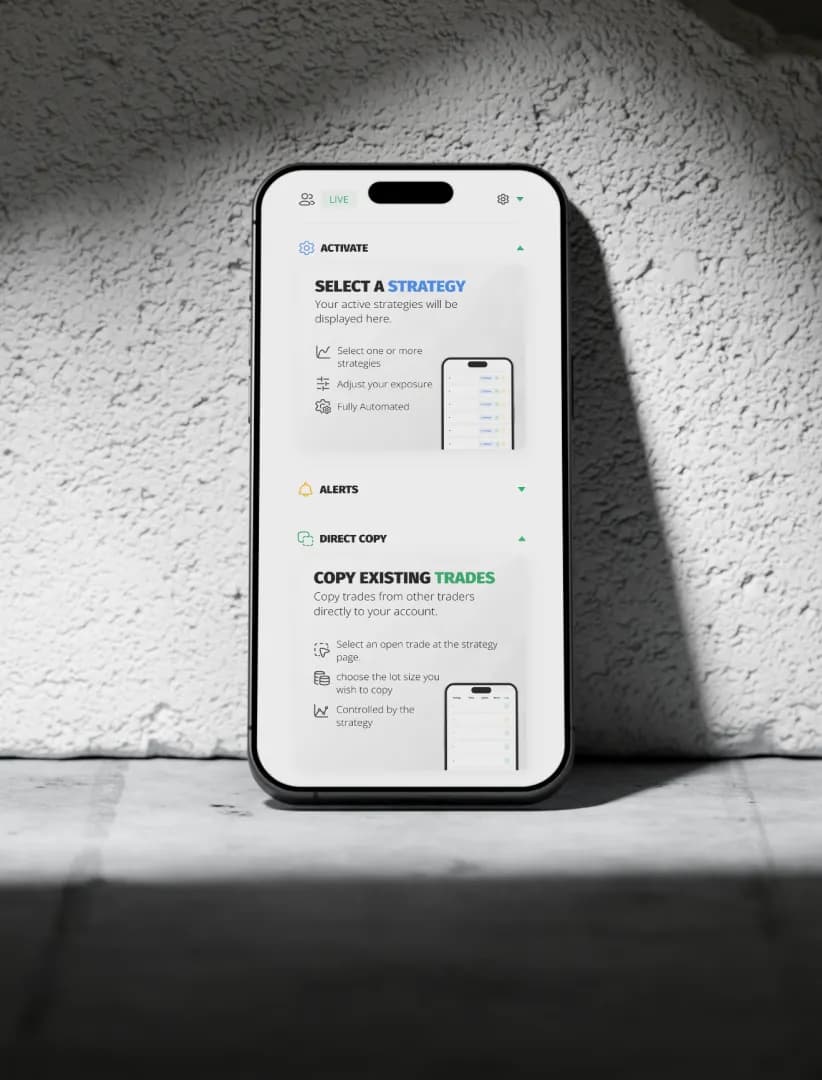
DupliTrade offers a selection of Strategy Providers that use algorithm trading. Every Strategy Provider uses their own type of fully automated or semi-automated trading strategy, each with their own trading characteristics such as Trend following, Price Action, Intraday, Swing, Breakout and more. DupliTrade also offers an advanced and powerful simulator to back-test strategies to see how their algorithms have performed over various time frames.
THE MOST COMMON ALGORITHMIC TRADING STRATEGIES EMPLOYES ON DUPLITRADE ARE:
HOW TO LEARN
ALGORITHMIC TRADING?
Algorithm trading used to be a domain for either the highly specialised trader or well resourced groups such as Funds Management companies. But over the last few years, advancements in technology have allowed these capabilities to trickle down to smaller groups or individuals who are building proprietary systems or are using off the shelf programs to deploy algorithmic trading strategies.
It is important to understand the different terminologies and characteristics of algorithmic trading (also known as algo trading) and quantitative trading (also known as quant trading) which are often used interchangeably or confused with each other.
Algorithm trading generally requires deep knowledge of the financial markets, fundamental analysis of factors that can affect asset prices, technical analysis of asset charts and indicators combined with mathematical logic to apply predefined rules before backtesting and ultimately applying to real market conditions.
Quantitative trading generally requires advanced knowledge of mathematics and statistics to research assumptions about the markets and to build probability models to see if there is a high correlation. If there is a high correlation or probability of an event repeating itself then this is developed as an algorithm and deployed to the market exchanges.
Algorithms can be handled by automated trading systems or manually by a trader, after receiving a signal to open or close a trade, from the algorithm. The algorithmic trading processes are rarely hands free, meaning that human involvement is always required at various times during the cycle.
Of course once the financial knowledge and mathematical or statistical know-how have been covered, there is still the small issue of coding an algorithm. These days most algorithm trading is coded using popular languages such as C++, C# (C Sharp), Python, Java, MatLab (requires licensing fees) or "R" which is a free open source program. Then when the algorithm has been developed and back-tested it needs to be developed in the language of the trading platform such as the MQL language in the very common MT4/MT5 platform, to carry out the trade functions (Buy / Sell / SL / TP orders).
IS ALGORITHMIC TRADING
LEGAL?
Online trading falls into two distinct categories. Regulated and unregulated. Regulated companies can be brokers or software companies providing platforms or tools for individuals or groups to use to trade on the financial markets. Regulated companies like DupliTrade work only with top tier regulated brokers to offer financial services to investors from countries that allow online trading including algorithmic trading.
To be considered a regulated company the company must be compliant with multiple countries jurisdictions such as the European Union's Markets in Financial Instruments Directive (MiFID), Australian Securities and Investment Commission (ASIC), British Virgin Islands (B.V.I), Japan's Financial Services Agency, South Africa's Financial Sector Conduct Authority (FSCA), the Middle East's Financial Services Regulatory Authority and other official legally recognised regulations.
MORE ON ALGO
TRADING
It is estimated that at least 80% of all global trading volume is performed using algorithms.The prevalence of algorithmic trading is well established in larger financial institutions and is being pushed forward with the technological advancements of Machine Learning (ML) and Artificial Intelligence (AI). These technologies are newer, more advanced and will undoubtedly lead the way for others looking to gain the qualitative edge in profitable trading.
One problem that arises with the current generation of algorithmic trading is that it is difficult to differentiate between successful and unsuccessful algo trading strategies. Most algorithms being developed have only been around for a short time, are narrow in their capabilities, do not employ risk management strategies and are not verified by the general trading community. DupliTrade has a unique offering in that the auditing process is very rigorous and not every trading algorithm can be offered to investors. Read more about the extensive auditing process.